
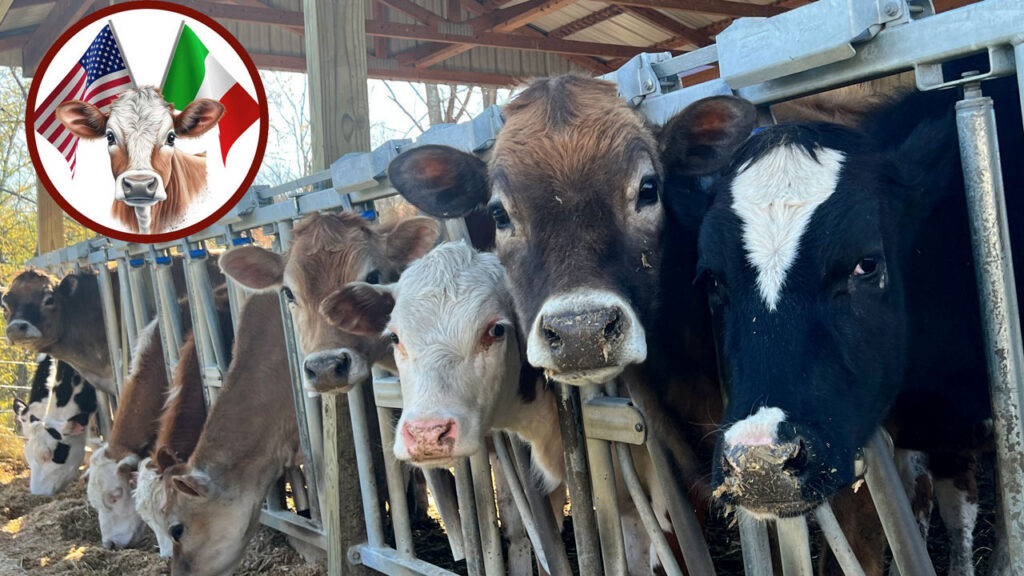
Meet The ‘Jersey Girls’
August 26, 2026 | 8 min to read
Jersey Girl Creamery crafts artisan Italian-style cheeses in the Garden State.
Photos Courtesy Jersey Girl Cheese
A drive along the New Jersey Turnpike will not introduce you to the real Garden State. The view of warehouses, refineries, container yards, and tangles of overpasses accurately reflects the industrial muscle of the Northeast corridor. However, it tells only a fraction of the state’s true story.
Turn west at Interstate 80, head toward the mountains, and within an hour, the landscape rises, softens, and greens. Lakes flash between hills. Silos punctuate open fields. Cows dominate the scene instead of commuters. In Sussex County, New Jersey’s northernmost county, you’ll find the quaint town of Branchville.
Just off a bend along Davis Road stands Hillcrest Orchard & Dairy, home to Jersey Girl Cheese. It’s here that owner Jim Cuneo says the days begin with herdsman Casey Schoelier feeding and milking the cows and then sending the milk straight to the on-site creamery for cheesemaking.
“We’re a small-batch, farmstead creamery committed to carrying on Italian cheesemaking traditions,” says Cuneo, who has owned and worked on the property since 1999. “From fresh to aged varieties, we craft authentic Italian-style cheeses right here on our farm, rooted in tradition and made with our own milk.”
A DAIRY RECLAIMED
Sussex County was a dairy powerhouse in the late 19th and early 20th centuries, when rail lines carried milk to New York City markets. Winter ice cut from local lakes preserved the milk’s freshness on its way to market before the advent of modern refrigeration. By the mid-1960s, development pressures, high operational costs, and changing agricultural demands led several dairies to close.
Hillcrest was one of these old-time dairy farms destined for demolition. Plans drafted in the late 1990s divided the property into a 10-home subdivision. The barns were in disrepair; the herd was long gone. In December 1998, Cuneo, who grew up on a dairy farm in nearby Denville that later gave way to 420 townhouses, made a decision that would alter not only his life, but the trajectory of this stretch of farmland.
“I purchased the 70-acre farm. I didn’t want to see another one disappear,” he says. “A lifelong friend of mine, Jeff O’Hara, who’s a vegetable farmer in Denville, and I discussed putting a herd of cows there and planting an apple orchard. I had absolutely no intention back then of getting into cheesemaking.”
Cuneo, who also owns a construction company, started from the ground up. The original barn required a complete rebuild, structurally and mechanically, so he reconstructed it inside and out, installing modern milking equipment, new stalls, proper drainage, cooling systems, and the infrastructure necessary for a contemporary dairy operation.
Four years later, he purchased a small herd of cows, primarily Jerseys prized for their rich, high-butterfat milk, and turned them out onto the fenced pastures. Today, the herd of “Jersey Girls,” as Cuneo affectionately calls them, grazes lush fields through the warmer months. In winter, they are fed non-GMO silage and hay harvested from the farm’s own acreage. The cows are milked twice daily, and at first, Cuneo sold the milk to a local cooperative.
Meanwhile, the apple orchard came into its own, growing to roughly 2,400 trees. As the trees began bearing full crops, Cuneo and O’Hara started pressing fresh cider each fall, turning harvest season into an experience as much as a product. What began as apple production evolved into a thriving you-pick destination.
From Sept. 1 through Nov. 1, families, many driving over an hour from New York City, arrive for hayrides into the orchard to pick their own fruit, such as McIntosh, Cortland, Honeycrisp and many other varieties. Others stop by the farm’s small store for bagged apples, fresh-pressed cider and warm apple cider doughnuts. Over time, the fall harvest transformed the property into a highly anticipated seasonal destination, drawing visitors back year after year.
The transition from milk to cheese began out of necessity.
TURNING MILK INTO A FUTURE
In 2018, after not having an outlet for the dairy’s milk, Cuneo chose to add a cheese facility. He expanded his existing farm store building and constructed a small batch cheesemaking room equipped with stainless-steel vats, pasteurizers, and curd tables, all sanitary, efficient, and functional. Shortly after securing licensing in September 2018, Jersey Girl Cheese officially opened, selling fresh mozzarella.
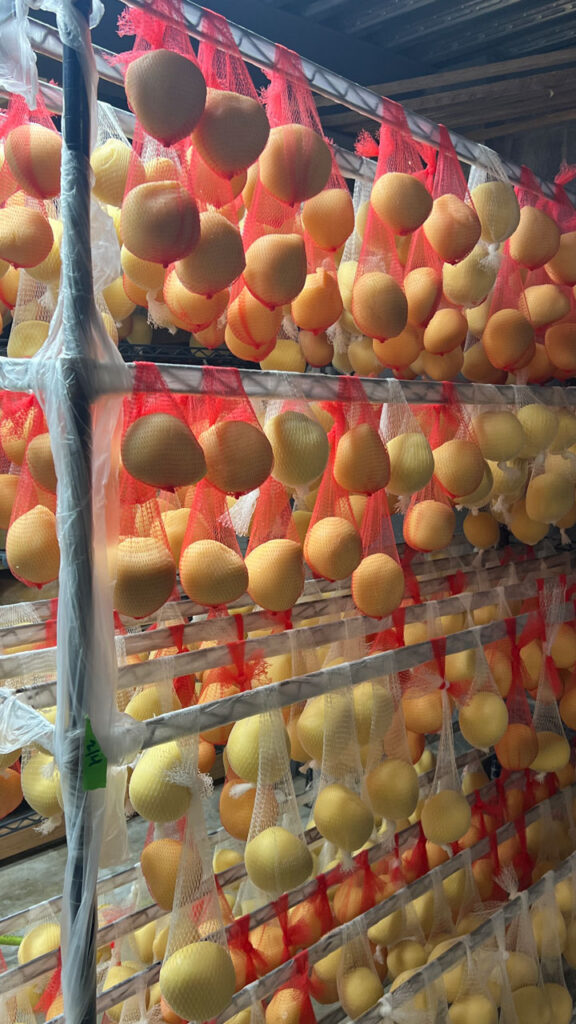
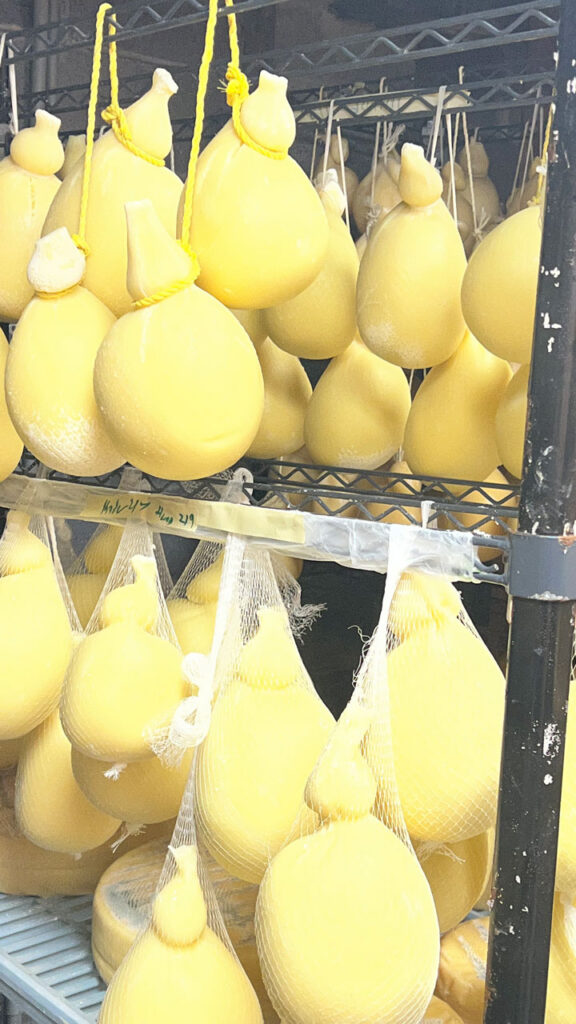
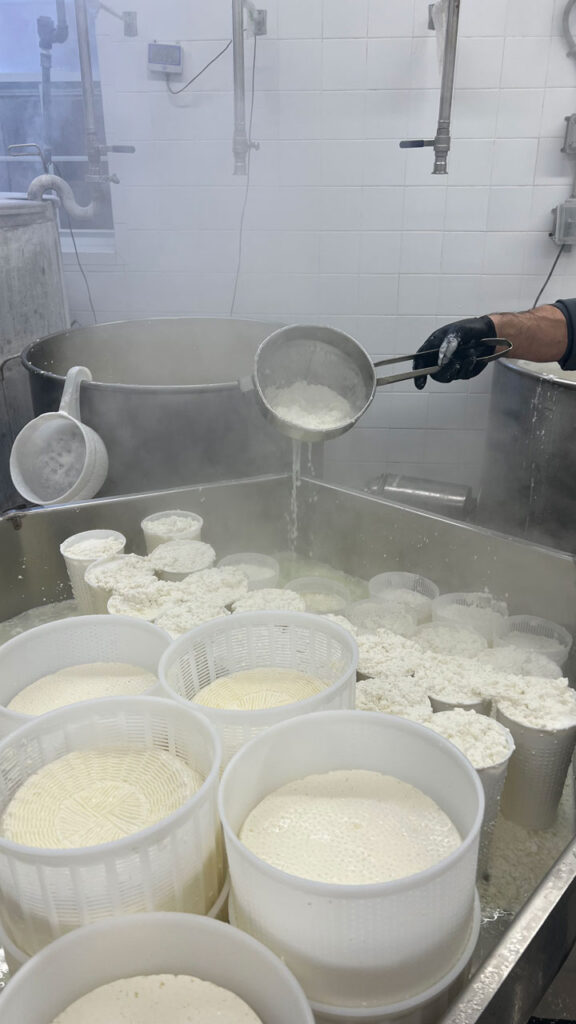
The response was immediate.
“I already had a big following from our orchard customers,” Cuneo says. “When I introduced cheese and started offering samples, it blew up. We were moving; we weren’t crawling, we were walking.”
THE CAVE BENEATH THE HILL
One of the dairy’s most defining features lies not in the milking barn, but in the hillside behind it. In early 2019, Cuneo excavated into the slope and constructed a brick-and-stone bunker measuring 17 by 23 feet, forming a man-made aging cave. The grotto was built as low into the hillside as possible, 3 feet underground, to maintain a consistent climate, around 50 degrees and 60 to 65% humidity, mimicking traditional caves across Italy.
Here, fresh cheeses, like Scamorza, dry for a few weeks, hanging like pears from twine. Aged styles, such as Caciocavallo, literally “cheese on horseback,” straddle beams, while Asiago wheels rest quietly on shelves, their rinds forming slowly.
“The cave holds hundreds of pounds of cheese, probably more than a thousand pounds,” says Cuneo. “To date, we haven’t outgrown it. That said, it’s slow in the winter, so in January we reorganized the entire cave and added shelves because it was getting very full.”
Every aged cheese at Jersey Girl passes through this subterranean chamber.
FROM MILK TO MOZZARELLA
Fresh cheeses are a cornerstone at Jersey Girl Cheese, highlighting the richness of the farm’s Jersey cow milk, the foundation for traditional Italian cheeses.
Small-batch artisan-style cheesemaking takes place five days a week, year-round. Cuneo’s cheesemakers bring an old-world craftsmanship to the process.
Mozzarella, the farm’s top seller in the summer, requires roughly six hours from start to finish. The process follows traditional pasta filata methods: curd formation, cutting, acidification, and stretching in hot water until the mass becomes supple and elastic.
Hand-stretched and pressed balls are immersed in brine, emerging with high moisture, mild tang, and delicate salinity. There’s nothing like the flavor and freshness that results when milk, produced steps away, is crafted into the quintessential caprese companion, creamy against sliced tomatoes and basil.
SEMI-AGED AND AGED CLASSICS
From fresh mozzarella, the lineup naturally progresses to lightly aged and fully aged Italian styles.
Scamorza, essentially a dried mozzarella, ages for two to three weeks. Mild and sliceable, it takes on a subtle smokiness even when unsmoked. Variations made at Jersey Girl include plain, red pepper, garlic, and the popular “spicy garlic,” a blend of red pepper and garlic.
“Our aged cheeses reflect the heart of Italy,” says Cuneo. “Firm, expressive wheels are crafted exclusively from our cows’ milk and matured with care. Some develop over a matter of weeks, others over several months. Each aging schedule is carefully guided to achieve the desired depth, balance and flavor complexity.”
Aged cheeses include Italian standards, such as Asiago, Caciocavallo, Provolone, and Toma, along with Canestratto, a firm, basket-pressed cheese that develops from nutty and buttery to savorier and sharper with age, suited for slicing or grating. There’s also Primo Sale, an aged, lightly salted cow’s milk cheese typically sliced for salads or served with olive oil, while Ricotta Salata, a pressed and salted ricotta, is used for shaving or grating over pasta and vegetables. In total, about 10 core varieties age in the cave, with seasonal adjustments to the lineup.
BEYOND THE BARN
Travelers who remain on the New Jersey Turnpike may never realize that this farm and creamery exist. However, those who take the roads less traveled to Branchville discover another New Jersey where Jersey cows graze rolling hills, cider presses hum in autumn, and Italian-style cheeses age quietly beneath the earth.
Hillcrest Orchard and Jersey Girl Cheese welcome visitors year-round at the Branchville farm store, with a second retail shop in Rockaway operated by Cuneo’s sister. Both locations offer the full range of Jersey Girl cheeses alongside farmstead meats like beef and pork, fresh eggs, crusty breads, and Italian pantry staples such as pasta and olive oil.
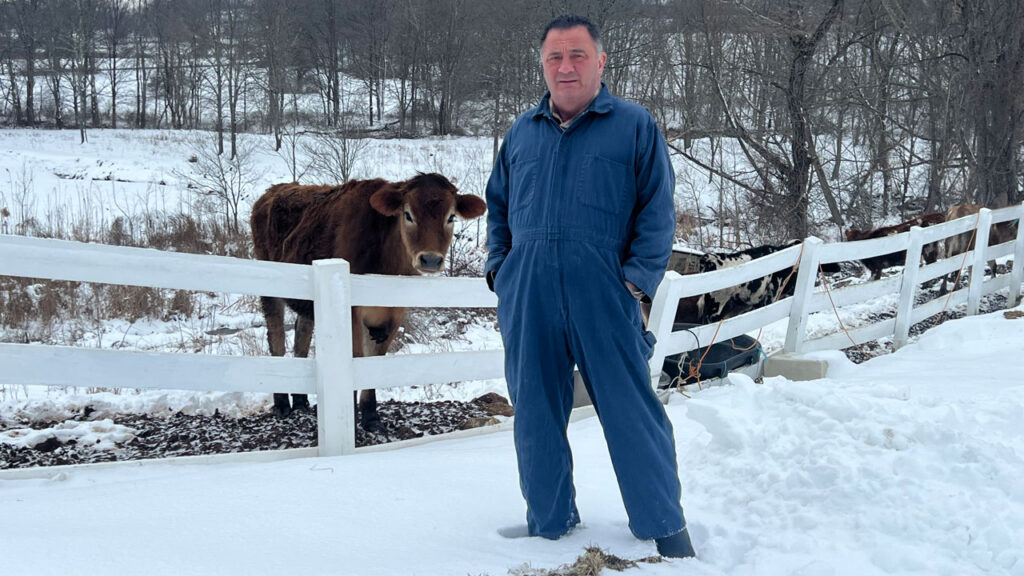
“We want people to come to the farm and enjoy an agricultural experience with cows, baby cows, chickens, and visit our quaint farm store,” says Cuneo. “Once they understand the quality of the milk and the care that goes into the aging, the cheeses speak for themselves.”
Cuneo’s favorite hard cheese is Asiago, which he likes to pair with a juicy Honeycrisp apple from the orchard in the fall. Spring and summer bring grazing cows and soft-serve ice cream at the stand; fall draws apple seekers; and even winter finds the store open with shorter hours.
Those unable to visit can find Jersey Girl Cheese at farmers markets throughout northern and central New Jersey, as well as on menus at select New York City restaurants. Future growth, Cuneo notes, will remain measured. “We’ll expand thoughtfully. Maybe a few more cows, more space, but always staying true to small-batch production.”
2 of 5 article in Cheese Connoisseur Spring 2026